Thoughts

Spotlight on: Focus groups

I love facilitating focus groups as a method to understand what is going on, whether it be with community groups or with employees or groups of staff.

There is a richness in the qualitative data collected in focus groups or listening sessions that you don’t really get any other way. Your quantitative data – the number crunching – tells you what’s going on, whereas focus groups complement this and help you to understand why it is happening. People’s voices add to the evidence base and help you to plan what to do next. For example, your data from your staff survey might tell you that people aren’t happy about something and you need to find out more detail as to what the problem is. Or, you might want to engage with a community group to understand how your service is landing with them. Focus groups are ideal for these situations.

Facilitation of a focus group requires exercising advanced listening skills and an ability to manage and flex with a group’s dynamics and needs, all while remaining focused (!) on getting answers to the questions you have. Questioning routes are usually semi-structured to allow for this kind of flex.

I always allow a fair bit of time for people to settle in, especially as a lot of the work I do is around ‘sensitive’ topics of diversity and inclusion. It’s important to allow time to build rapport and allow people to feel comfortable with you from the moment they enter the space and in the first couple of ‘warm-up’ questions. You can’t expect people to share what might be personal / challenging for them without creating the environment for that to happen. The facilitator’s engagement with people in those opening moments is key to how the rest of the session will go. The facilitator needs to be fully present, listening, open and non-judgemental, encouraging contributions gently by the attitude of genuine interest that they display.

An external, neutral, facilitator is valuable wherever you need people genuinely to open up. People can input anonymously, as the facilitator’s report or presentation can ensure all themes are captured without identifying people.

If you need some help with consulting with your staff or a community group, get in touch – we can design a strategy that’s right for your context and purpose, helping you get the answers you need.

photo of a notebook with a small icon of cat's face with the word 'think' printed underneath
Events

Women in Academia: Resolutions Retreat

25 January,  2020, 10AM-1PM, Newcastle-upon-Tyne

  • Too much to do?
  • Hard to find time for the important tasks?
  • Not sure what your priorites are?

Give yourself some space to focus on YOU.

This interactive workshop will support you to:

  • Define what is important to you, professionally or personally.
  • Set realistic goals to aim for.
  • Leave with a personalised plan of how to stay on track and achieve your goals.

Be guided to reflect, to learn and to set your goals.

Share the space with other women who understand the particularites (and peculiarities?!) of the academic world.

Join us in the supportive retreat of the Figgis Suite at the Tyneside Cinema to set your direction for 2020.

Tea and coffee will be served on arrival to help us get started!

***EARLY BIRD OFFER: Book by midnight on 8th December to qualify for a 30 min phone/skype call with Julie in February/March/April to provide personalised support in progressing with your plan!***

BOOK VIA EVENTBRITE: https://wiarr.eventbrite.com

Information about the Tyneside Cinema, including information for people with acccess requirements, can be viewed on their website.

If you have any queries about the event, or are wondering if it is right for you, please do get in touch. You can email me via my website contact form or find me on LinkedIn or Twitter

And do check out this blog on my rationale behind this event!

coffee-2589755_1920

close-up of older woman's face in golden sunlight
Events

Talk: Women’s Liberation Movement in the North East – January 2018

WLM

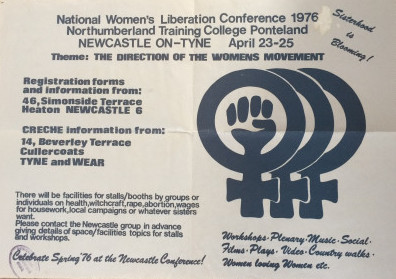
In 1976, women gathered from all around the country in Newcastle, well, Ponteland to be precise, for one of only 10 national Women’s Liberation Movement conferences. 1500 women attended to consider the ‘direction of the WLM’. In this public talk organised by the North East Labour History Society, I drew on my interviews with some of the organisers and attendees as well as archival research to tell the story of how the conference came to Ponteland, why it was significant to the region and the national WLM.

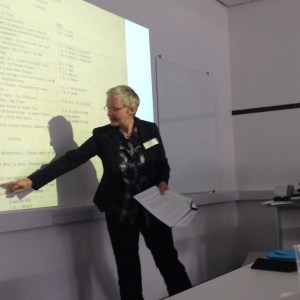
The talk was a reprisal requested by NELH Society after I gave it at their joint symposium in October 2017 with Northumbria University for the NELH Golden Jubilee year.

AF1QipOzu1fCML_RzcTnlCfoeqx7FhSUQIO9YBTFzBY=I-U
NELH and Northumbria University symposium, October 2017